
Information hub for Malorevi
A compact guide to what this site covers, how I think about AI governance factor integration and how the different pages fit together for Canadian research and risk teams.

How to use this page
Use this page as a quick orientation tool before you dive into detailed discussions of AI governance factor integration, data handling practices and the limits of what I offer on Malorevi.
I treat this info page as the workbench sketch: rough lines that show how the pieces of
Malorevi fit together before you pick up any single tool. If you want the story, head to
the about page. If you want the practical offer, start at the index page. If you want to
talk, the contact page is waiting. When you are ready to dig into how data and oversight
are handled, the cookie policy, privacy policy and disclaimer pages give you the
details.
Explore more
Site information guide
A practical map of what Malorevi covers, how I think about AI governance factor
integration and where to look next if you work on financial market research in Canada.
Method notes, workflows, caveats. This page gathers the core information you might want before diving into the more detailed sections of Malorevi. I focus on how I approach AI techniques that weave governance metrics into quantitative selection and risk models, and how that work fits within a Canadian regulatory backdrop. You will find a plain language overview of the main pages, the ideas that keep showing up in my work and the limits that shape what I do. I am not here to sell magic formulas or sweeping promises. I am here to show how I treat governance data as a material that needs careful cutting, sanding and joining before it belongs anywhere near a production framework. If that slow, craftsmanlike pace sounds familiar, this page is your map for the rest of the site.

Context before you dive deeper
What this site is for, who I have in mind when I write, and the boundaries I keep around
AI, governance and financial market research.
You might have reached this page from a search result, a forwarded link or a quiet recommendation from a colleague. Before you wander off into the details, I want to give you a compact sense of how Malorevi fits together and what you will not find here.
First, this is not a training platform or a catalogue of investment products. I do not sell courses, coaching or step by step lessons. I do not describe or promote particular securities, and nothing on the site should be treated as financial, legal or tax advice. Instead, I talk about how AI can help professional teams integrate governance metrics into their existing research and risk frameworks in a way that is transparent and reviewable.
Second, the content is written with Canadian institutions and professional users in mind. References to governance practices, oversight concerns and documentation habits assume you are working inside a regulated environment with committees, internal policies and external expectations. If you are reading from elsewhere, much of the thinking may still resonate, but you will need to map it carefully to your own rules and practices.
Third, I am deliberate about limits and disclaimers. Across the site you will see
reminders that results may vary and that past performance does not guarantee future
results. These are not legal boilerplate pasted at the end; they reflect how I have seen
models behave in the real world. Governance features can be powerful, but they are still
approximations built on imperfect data and evolving disclosures.
Finally, I care about tone. You will not find grand promises or glossy slogans here. I write the way I would speak to a peer in a workshop: a little playful, sometimes blunt, always respectful of the complexity of your work. If you value sturdy processes over spectacle, you will probably feel at home wandering through the rest of Malorevi.
Next steps depend on your questions. Here are a few paths through Malorevi that match the most common ones I hear from research, risk and governance teams.
Where to go from here
Curious where to go next, or how this site connects to your day job in financial market
research? This section offers a few practical routes based on the kind of question you are
carrying around.
If you are wondering who is behind Malorevi and why I care so much about governance
metrics, start with the about page. There I explain the experiences that pushed me
toward AI governance factor integration and the craft principles that shape my work. You
will see how I moved from general data roles into this narrow, stubborn focus on
traceable governance features and auditable workflows.
If you want a concrete picture of what I offer, the index page is the best next stop. It walks through the kinds of analytical reviews and personal consultations I provide, the Traceable Feature Stack and Measured Integration Loop ideas, and how I approach collaboration with research, risk and governance specialists. That page is written for teams who suspect they are underusing governance data and want to know what working together might look like.
If your questions lean toward privacy, tracking or legal boundaries, the cookie policy, privacy policy and disclaimer pages are waiting. They explain how I use cookies, how I handle personal data and where the hard limits sit around everything you read here. Those pages matter just as much as the more technical ones, especially if you are responsible for compliance or vendor review.
And if you already know you want to talk, the contact page is there when you are ready.
Use it to sketch your current situation, the governance information you hold and the
oversight concerns you face. I will read your note carefully and respond with a plain
spoken view on whether and how I can help. No miracle systems, no rush, just a measured
conversation about making governance and AI work together in your context.
Page map
Malorevi is small on purpose. Instead of dozens of loosely related pages, I keep a
tight set that each answer a specific question. The index page explains what I
actually do with AI governance factor integration and who I work with. The about
page tells the story of why I built Malorevi and how my approach grew out of real
research and risk work. The contact page offers a straightforward way to start a
conversation if you recognise your own environment in these descriptions. The
cookie policy and privacy policy explain how I handle data and tracking tools on
the site. The disclaimer sets the legal and practical limits of everything you
read here, including the reminder that results may vary and past performance
does not guarantee future results. This info page sits above them all as a quiet
guide.


Core themes
Several ideas repeat across the site because they underpin everything else I do. Governance metrics matter, but only when treated as first class citizens inside your research stack. AI is useful, but only when its steps are traceable and reversible. Documentation is boring, but only until a committee meeting turns tense and you need to show exactly how a feature behaves. On Malorevi, I return to these themes in different lights: how to build a Traceable Feature Stack, how to run a Measured Integration Loop, how to balance enthusiasm for new methods with the reality of oversight and model risk. This page is not a full manual. It is a signpost that helps you decide which part of the site to read next, depending on whether you care more about data pipelines, feature design, risk documentation or day to day collaboration between research and governance specialists.
What this site covers
Scope, methods and the recurring ideas behind Malorevi
When I talk about AI governance factor integration on Malorevi, I mean something quite specific. I focus on techniques that bring governance related information into quantitative frameworks in a way that is transparent, documented and compatible with scrutiny. That includes how I treat disclosures about board structure, voting behaviour and stewardship, how I translate them into structured variables and how I keep a clear record of each transformation. I am not building trading systems, automated decision engines or public dashboards. I am building processes and artefacts that help professional teams understand how governance characteristics interact with other signals inside their own research environments. You will see three recurring pieces. First, the Traceable Feature Stack, which breaks feature engineering into small, named steps with narrative notes and tests. Second, the Measured Integration Loop, which moves from listening and mapping through cautious prototyping to monitored adoption. Third, a commitment to neutral, consultation focused work that stays away from prescriptive advice or promises about outcomes. Results may vary, and past performance does not guarantee future results. My aim is to give you a clearer, calmer way to discuss governance and AI with colleagues, committees and reviewers.
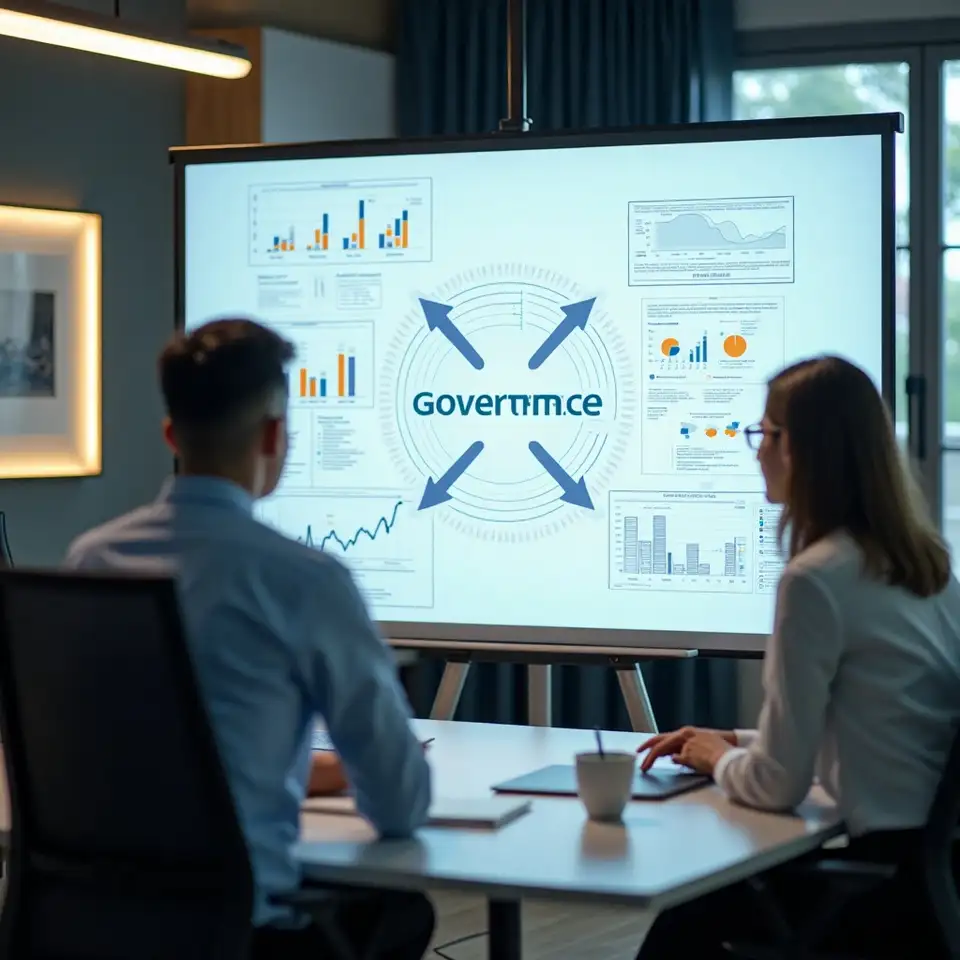
Key ideas that show up everywhere
Governance data, AI tooling, regulatory expectations. I keep circling these three elements across the site, always from the viewpoint of someone who has to defend their work in a serious room. This page pulls out the main ideas so you can see the grain before you run your hand along each board.
- Governance as raw material
- I start from what already exists in your organisation. Governance information often lives in reports, notes and disclosures that never quite reach the quantitative machinery. My work, as described throughout the site, focuses on structuring those materials into a stable, versioned layer that can feed into models without becoming a mystery. The emphasis is on provenance, clarity and reversibility rather than exotic algorithms.
- Neutral, craft based stance
- I stay in a consultation focused lane. The site does not offer courses, training programmes or prescriptive investment blueprints. Instead, I describe analytical reviews, mapping exercises and personal consultations that help teams refine their own methods. The aim is to leave you with governance features and documents you own, not a black box you depend on.
AI as a sharp tool
Every time I describe AI on Malorevi, I frame it as augmentation, not automation. Models can highlight patterns between governance characteristics and market behaviour, but they cannot replace judgement or see the future. I stress, again and again, that results may vary and past performance does not guarantee future results. The real value lies in making assumptions visible so experts can argue about them constructively.
Oversight as a design constraint
Oversight runs through everything I write. Canadian institutions face growing
expectations around how AI is documented, validated and monitored. Across the site,
I explain how I design feature stacks, diagnostics and narrative notes so
committees, auditors and risk teams can understand what changed, when and why. This
is not legal advice, but it is shaped by a respect for real review processes.